
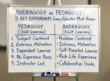
Fixing Corporate Learning Bottlenecks, the Technical Solution

Share

Many employers have complained about some of their workforce going through challenges during corporate training. If the said employee(s) is an adult learner, there is a possibility that they might be experiencing cognitive overload that limits their effectiveness.
To get rid of this instructional design bottleneck, simply run a technical training audit for all your staff while ensuring that the matured professionals have a curriculum that aligns with their neuroscience. This way, you do not have to worry about a worker’s incapability at your workplace.
Read: Andragogy vs. Pedagogy: How to Fix Adult Learner Lock Up Under Pressure
Key Takeaways
-
The Bottleneck is Instructional Design Not Personal
When workers don’t complete training as expected, some believe it is due to their ineffectiveness. However, the cause is based on the rigid instructional design bottleneck that treats matured professionals as children. So, adopt a direct approach that teaches based on previous experience(andragogy) today.
-
Stress Causes Learning Shutdown
When mature professionals are faced with a high-stake test, they fall into panic mode. This hijack or brain freeze results in blood starvation to the prefrontal cortex, the part responsible for knowledge retention.
-
See LMS as a codebase to Debug
The use of technical training audits allows you to treat your curriculum like a software. During Learning Management System(LMS) analysis, ensure to highlight areas learners find difficult and debug by breaking down the difficult points. Usually, they are quizzes or walls of text.
-
Biology Remains the Ultimate Technical Fix
Ensure to integrate 60-second somatic micro-breaks in the learning curriculum. To signal safety to the brains and improve learner’s focus. This simple exercise improves executive function.
Read: The Un-AI-able Student: Mastering Biological Agility
The Cost of Stalled Training
When organizations ignore corporate training bottlenecks, it indirectly compounds their financial losses thereby leading to massive operational friction. While this inconvenience might not be due to the recruiting manager competence, it is important as the top lead to prioritise whatever issues that could result in delayed output from any member of your unit.
The first step to address poor results from staff is to put aside any sort of traditional learning design. This is because it treats adult learners as children, forcing them to assimilate within a rigid compliance box that triggers anxiety.
When employees are pushed into a stressed state, their ability to process simple and logical information drops causing them to miss key details. To solve this, you are expected to conduct a rigorous technical training audit to identify necessary friction points.
Then, restructure the information model to align with the learner’s mental state. Gradually, your staff neuro pathways open and the expected result is achieved. Note that employee training is not only about acquiring expensive softwares. It is more about having a curriculum architecture that ensures that your team stays calm and fully ready to assimilate data that helps optimize their performance.
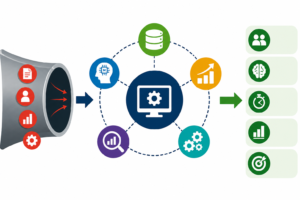
How to Diagnose Adult Learners Friction
The best approach to diagnosing adult learners’ friction is to look at past behaviors. Then, you can analyse their biological state to build a framework that helps tackle corporate training cognitive load that floods the brain.
The truth is that information bombardment triggers amygdala hijack, preventing blood flow to the prefrontal cortex, the part that ensures logical reasoning. So as an educator, you are expected to incorporate necessary designs in your curriculum that helps to easily track drop-off rate spikes using presented analytics details.
Questions such as; are users quitting because of passive text blocks or they are freezing due to timed tests? Can be used to accomplish this goal. And in due time,you will notice that the challenge of your team experiencing cognitive failure during training becomes history. By identifying digital friction points and replacing them with self-direct, low anxiety learning models, you have ensured rapid upskilling.
The Solution: Mapping Out a Technical Training Audit
To dissolve barriers stalling your workforce learning, see a curriculum like a software system that needs debugging. By adopting this approach, you have built an ultimate solution of technical training audit that exposes areas your instructional design is clashing with human biology.
To begin, first pull all participants from your Learning Management System (LMS). This would make it easier to map out necessary digital frictions. If the majority (70%) of your staff exit the course at stage 3, you can draw conclusions that the instructional design bottleneck is within the massive wall of text or high-stake quiz.
Then, calculate the corporate training cognitive load. As earlier mentioned, matured learners best process information through self-direct contextual approach. If your audit reveals passive educational materials and excessive clicks, know that the curriculum triggers mental fatigue.
At the end, you can structure the identified friction points into bit-by-bit data for easy assimilation through the neural pathways. This is because the replaced pedagogical tests become scenario-based challenges that encourage participants memory retrieval without inducing panic.
Another advantage of using technical training audit is that it allows you to shift from stressful corporate education into an optimized developmental pipeline that aligns with your brand’s goals and objectives. It doesn’t just improve task completion rates. It unlocks individual rapid retention and better understanding of what the job entails to prevent financial leakages.
Biological Override: Implementing Somatic Micro-Breaks
If you have followed this article from the beginning, you can affirm that biology remains the ultimate technical solution to learning issues. So next time when a system imposes a corporate training bottleneck, know that your employee nerves treat the information as a threat rather than a vital detail.
Another approach to bypassing this hurdle is integrating somatic micro-breaks into learning pipelines. It can be just a brief 60-second physical exercise or a soft gaze to expand their peripheral vision. When you incorporate these deliberate mental reset, you signal safety to the brain, overriding any situation of amygdala hijack.
Also, micro-breaks help restore blood flow to the prefrontal cortex, the part of the body responsible for active memory retention and sound reasoning. A simple somatic regulation can save your business millions in staff training as it ensures your workforce does not see challenges as corporate chore but an avenue to grow.
Read: Beyond Feynman: The Somatic Hack to Learn 2x Faster Without Burnout
Conclusion
If you want to fix your employee(s) corporate learning bottleneck, prioritise their biological alignment. This way, you have transformed rigid instructional design into high performing upskilling. When an adult learner nerve is calm and fully ready for knowledge retention, tasks gets completed faster and there is a direct boost in your company’s end-result.