
The Institutional Audit: Fixing Technical Training Curriculum Bottlenecks

Share
Introduction
The reason for most traditional technical training failures is that institutes prioritise completing subjects over student assimilation capability. To fix this, there is a need for organizations to shift towards strategic cognitive load management in training over information flooding. This way, learners retention improves without any cases of burnout.
Key Takeaways
-
Assimilation Over Completion
While completing a subject makes a lot of sense, assimilation should always come first. Training programs that don’t follow this rule will only rush students through a syllabus rather than absorbing key materials.
-
Biology is very Important during Learning
The problem is not the learner being unable to comprehend complex courses. The issue is that most times instructors use a learning approach that overwhelms the student’s nerves thereby triggering a response that locks up logical reasoning.
-
Shift to Strategic Data-Chunking
Strategic data-chunking involves breaking down contents into bite-size and practical pieces using models such as inverted pyramids. This teaching entails disseminating foundational concepts of a core complex subject.
-
Embrace Somatic Reset and Competence-Based Design
Your curriculum design should be active skill mastery centric rather than just completing the textbook. Integrating somatic regulation activities such as deep breathing can help you achieve this goal and think better.
-
Human Resilience is a Corporate Asset
While it is easy for AI to commoditize raw knowledge, the game-changer is your ability to remain calm and focused under immense pressure. This trait gives you a competitive advantage in the labour market.
Read: The Regulated Earner: A Framework for Student Success
The Crisis in Enterprise Upskilling
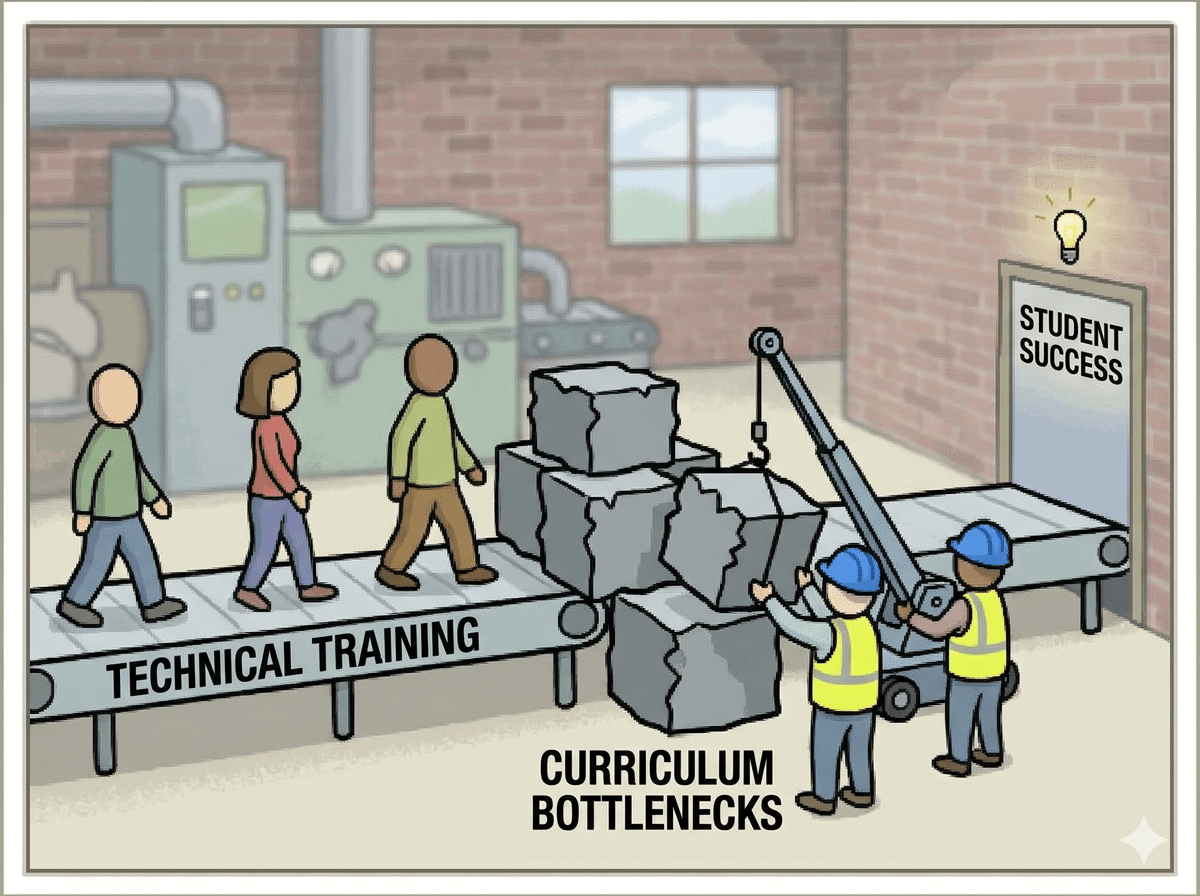
The current crisis in the corporate hemisphere is that companies keep budgeting millions for employee training. Yet, staff technical upskilling keeps hitting a wall. The cause of the rampant issue can be ascribed to managers focusing more on data delivery while ignoring the mental state of the individuals involved.
When employees are overwhelmed with too much complex software framework without any structural support system that serves as an exit from cognitive pressure, there is usually friction in the data assimilation.
To achieve cognitive load management in training, create a strategic system that allows introducing technical subjects without burdening the work memory while preventing technical student burnout with no issue.
Shifting Focus from Logistical to Biological Bottlenecks
Logistics such as; schedule, software, and calendars among others are what traditional corporate prioritising during training. This is why there are rampant cases of drop out or student failures because the core factor (the biological problem) is not addressed.
To curb this menace, the training program should not be a dumping ground that pushes students into survival mode. It should be a process where learners have the ability to think clearly and interpret information. The main goal here is the body and brain aligning to achieve needed results.
An excellent approach to make this possible is creating a curriculum design that allows students to master subjects gradually. This ensures competency and eradicates situations where students get bored during lectures.
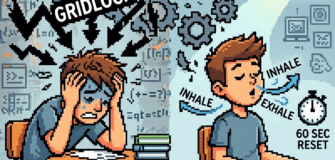
Another helpful tip includes involving somatic regulation activities during the learning journey. It can be physical exercise or a 60-second breathing technique. The objective here is to calm the nerves, clear out brain fog, and reopen the mind for the technical data assimilation. By treating employee stress level and energy as an important part of upskilling, there would be a drastic reduction in student or staff burnout.
The Flaw of Traditional Technical Lecturing and Strategic Framework to Tackle Data-Chunking
The main reason why traditional technical lecturing appears unreliable is because of its adopted data-dumping model. Most time, instructors push out endless code lines, and theories among others while hoping that exposure equals mastery.
However, the notion is wrong because it does not meet the required reality. To solve this problem, a structural delivery should be created that enables the brain to seamlessly process information when faced with overloaded tasks.
Institutions can also play a significant role in solving this rampant problem. They can shift strategic data-chunking models by prioritizing cognitive load management in training. This way, information is no longer presumed massive as complex concepts are disseminated into smaller pieces and practical steps taken for easy assimilation.
You could also utilise the inverted pyramid model as a fundamental step to teaching the most important part of the topic. After that, other complicated details can follow. During the learning session, have a resilience ledger that keep track of student energy.
If you notice withdrawal at any interval, initiate a quick break to give the brain a chance to refresh. By doing this, student overwhelming becomes history as they are always calm and focused during the study experience. The main point here is ensuring that your content are presented in ways that align with the learning pace of students involved.
How to Transition to Active-Recall Performance
The best approach to becoming an active learner is to gravitate toward an high-performance environment that allows skills mastery in real-time. This way, you do not have to spend hours sitting for bored classroom sessions.
Modern workforce need to adopt this competence-based curriculum design if they want to achieve the best results. During this process, students engage learning material with precision, peer mentoring, and active recall exercises in order not to face unexpected errors such as triggering the body freeze response.
The purpose of the somatic regulation activities for learning such as 60-second deep breathing is to make sure that the nervous system remains calm, and the prefrontal cortex stays ready for complex subject breakdown.
By aligning physical exercise with active learning, you become an individual that does not only maintains composure but possess the required cognitive skills needed to handle technical issues under pressure.
Try This Now
Preventing technical student burnout does not require overhauling your entire learning process. All you need to clear the bottleneck is to run a training module that structures assimilation to your mental capability. Here is an effective 60-second model to adopt;
-
Draw out the Cognitive Bottleneck
From your lesson plan, identify areas that appears complex. These are the dense parts instructors tend to spend more time on.
-
Apply the Inverted Pyramid
The inverted pyramid involves stripping out the less technical criterias. During the first 5 minutes of learning, prioritise the core concepts to build a solid foundation before adding other variables. This way, you get a better understanding of the subject.
-
Insert Somatic Reset
Assimilation is not just about going through materials. Before diving into the more technical section, insert a 60-second somatic reset to refresh your mind. By doing this, you clear the brain fog and become ready for the next level.
To shift into cognitive load management in training, try creating a student internal resilience balance. This enables brain pause and respond to stress that might block logical thinking or memory retention. Test the above structural plan during your classroom session and you will find it effective for absorbing high-stake technical data.
Read: The 2026 Micro-Mastery Protocol: How to Build a Human-AI Study Architecture
Turning Your Human Resilience into Corporate Competitive Value
AI overflow has resulted in the increase of diffused technical knowledge. To solve this issue, corporates should choose employees that remain calm under intense operational stress to be able to achieve competitive value.
Companies that choose not to follow the next-level guideline will notice a decline in their staff cognitive load management in training. By structuring curriculum to respect human limits, you are shown that protecting your team’s mental bandwidth is important to your organization. As the employees gradually navigate the high-stake learning phase, their work output improves reflecting delivery on your sustainable enterprise.
Conclusion
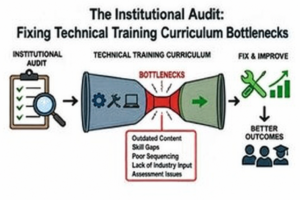
Fixing technical training bottlenecks involves a dual approach. First, the curriculum should be restructured to protect the learner’s mental health. This way, an overwhelming data dump does not occur that trigger the nerves. Institutions can effectively bridge the learning gap by conducting an audit that protects their educational investments and creates a high-performance pipeline for scaling student certification rates.